


The Wedding That Changed How I Think About AI


Sources: Eight Oh Two 2026 AI and Search Behavior Study; SOCi 2026 Local Visibility Index
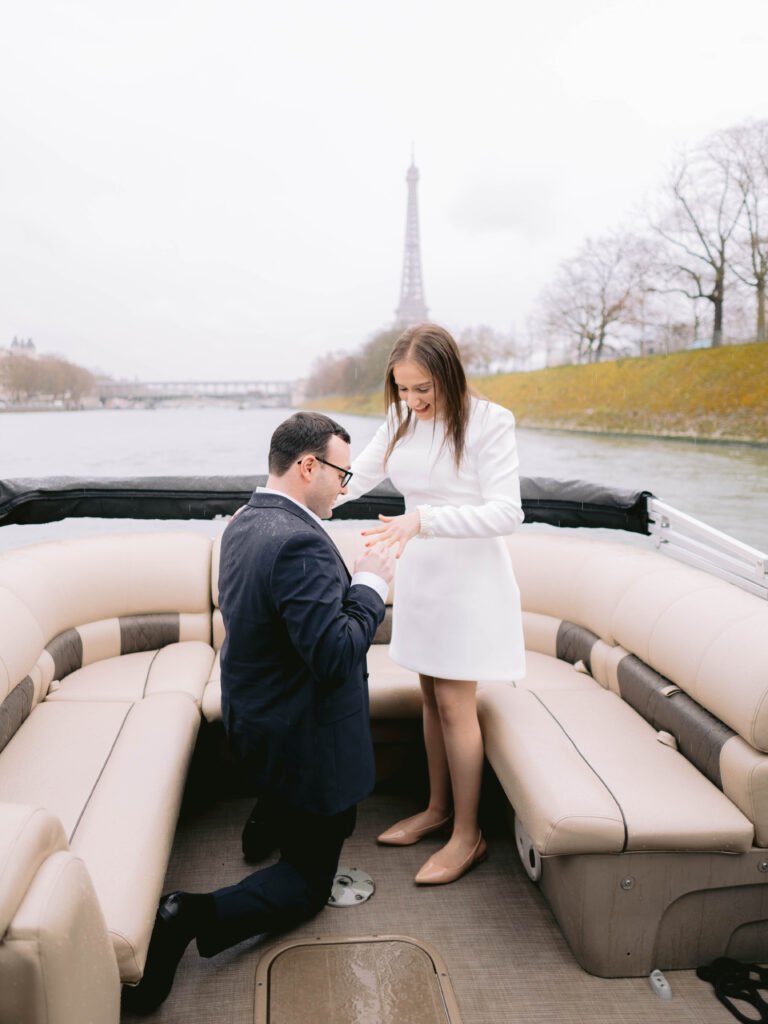
I got engaged last March. In Paris. What followed was one of the most powerful AI life moments I’ve ever experienced.
Before the proposal, I spent more time than I’d like to admit talking to ChatGPT about how to pull it off. The location, the timing, whether to do it on the bridge or wait for the boat, whether a ring box in a pocket is too obvious. Those are moments that define how we discover brands in the truest sense: the kind of conversation you only have when something big is about to change, and you need a thinking partner who won’t judge the question.
Ultimately, I ended up proposing on a private boat tour of the Seine. ChatGPT helped me plan the perfect proposal in one of the most romantic cities in the world. It knew the arrondissement, the vibe I was going for.
It helped me nail the moment.
What it didn’t do, at least not yet, was everything that came next. And that’s the part I can’t stop thinking about.
Because here’s what AI actually knew in that Paris conversation. It knew I was about to propose. The system recognized I was in a serious relationship. Furthermore, it knew I was at the exact moment in life where everything that follows, the wedding, the home, the finances, the honeymoon, the kids someday, was about to get unlocked simultaneously.
It had all the context. It just didn’t connect the dots.
Imagine if it had.
The Moment Everything Unlocks
Engagement is what I’d call an upstream life moment. It’s not just an event. It’s a door that opens onto a long hallway of other events, each one triggering a new category of spending, a new set of decisions, a new version of you.
Think about what follows a proposal in rough chronological order.
You need a venue. A caterer. A photographer. A band or DJ. Flowers. A dress or a suit. Invitations. A rehearsal dinner. A honeymoon. Travel insurance. Probably a joint checking account. Maybe your first home together. Possibly a car that fits two people and eventually a car seat. Maybe a conversation about life insurance for the first time. A financial advisor. A pediatrician, somewhere down the line.
One moment. One conversation. One yes on a boat on the Seine. And suddenly you are the target audience for a dozen industries simultaneously.
Of course, Google has always known this theoretically. Wedding vendors have always bought keywords against it. But a search engine only knows what you ask it. It doesn’t know where you are in life. It doesn’t connect the dots.
An AI does.
What AI Knew About AI Life Moments That Google Never Could
When I was planning that proposal in Paris, I wasn’t searching. I was sharing. And that’s the difference that changes everything.
A search engine gets a keyword. An AI gets context. It knew I was about to propose in Paris, that I wanted the moment to feel intimate and not performative, that a private boat on the Seine was the right call over a crowded bridge. It knew all of that because I told it, the way you’d tell a friend.
Moreover, a good friend, when you tell them you just got engaged, doesn’t just help you find a florist. They ask the questions you haven’t thought of yet.
Have you thought about opening a joint checking account before the wedding? Chase and Citibank both have solid joint account products with good mobile apps for managing shared expenses. You’ll want to figure out the money stuff before you combine households anyway.
Have you and your partner talked about where you’re going to live? If you’re both renting right now, this might be the moment to start thinking about buying. Rates have been moving. Do you want me to walk you through what pre-approval looks like?
You’ll probably want to book the honeymoon early if you’re thinking international. Peak season in the Mediterranean fills up fast. What kind of trip are you thinking?
Importantly, none of those are intrusive. And none of them are ads. They’re the things a thoughtful friend with broad knowledge would say to someone who just told them the biggest news of their year. They’re the natural next questions in a conversation between people who trust each other.
In essence, that’s what AI has become. Not a search engine. A trusted advisor who happens to know everything.
However, the problem is that right now, whether your brand shows up in that conversation is mostly an accident. Aethon AI exists to make it intentional.
The Upstream Cascade
Here’s what I couldn’t stop thinking about as the planning progressed.
Research shows that AI-referred traffic converts at five times the rate of paid search. I felt that personally. As a result, every vendor I found through an AI recommendation converted faster than anything I found through Google. Not because the vendors were better, though some were. Because I arrived already trusting them. AI had essentially pre-screened them on my behalf, in the context of my specific situation, and handed me three names instead of three hundred. I didn’t compare. I called.
Consequently, that’s a different kind of customer. That’s a warm lead that showed up at the door already sold on the category, already narrowed to a shortlist, already ready to book.
And the cascade kept going. Once I was deep in wedding planning, AI started connecting dots I hadn’t connected myself.
We were talking about honeymoon hotels and the conversation naturally drifted to whether we’d ever want to go back to the same destination for an anniversary. Which led to a conversation about what our travel life would look like in the next five years. Which led to a conversation about whether our current apartment made sense once we had kids. Which led to a first, genuinely useful conversation about buying a home that didn’t feel like a pitch, because it came from context, not a banner ad.
I wasn’t ready to buy a house. Nevertheless, I started thinking about it. That thought didn’t come from Zillow. It came from a conversation about my honeymoon.
That’s upstream influence. And it’s worth more than any keyword.
What This Actually Means
I’m a builder by trade. I co-founded Aethon AI because I believe the shift in how people discover and trust brands is the biggest marketing story of this decade. So I’m not neutral here. But I’m also genuinely living this, and I want to say clearly: the experience isn’t creepy. It doesn’t feel like surveillance. It feels like having a really well-informed person in your corner who remembers what you told them and follows up.
The brands that understand this are going to have an enormous advantage in the next five years. Not because they’ll manipulate AI into recommending them, but because they’ll build the signal ecosystems that make AI confident recommending them when the context matches.
A guy asks ChatGPT how to plan the perfect proposal in Paris. He ends up on a private boat on the Seine. She says yes. And somewhere in the conversation that follows, the right venue in New York, the right mortgage lender, the right hotel in Santorini, the right car with enough room for a car seat someday, gets mentioned by name.
Not because of an ad. Because AI knew where he was in life and what came next. Because the brands behind those names did the work to be present.
That’s the game. And it’s already happening, every day, at kitchen tables and on river boats and in all the moments in between.
I’m getting married in October. AI helped me plan the proposal. And I still can’t decide if that’s the most romantic or the most interesting thing about this whole experience.
It’s probably both. But I’m pretty sure the most important thing is this: the brands that were in that conversation got a customer. The ones that weren’t never knew what they missed.
Questions About AI and Brand Discovery
What is an AI life moment?
An AI life moment is a point in a conversation where someone shares a major life transition with an AI, getting engaged, having a baby, buying a first home, and the AI has enough context to surface downstream needs before the person has even thought to search for them. These moments represent some of the highest-value commercial opportunities in AI search because the buyer is open, trusting, and pre-qualified all at once.
Why do brands miss AI life moments?
Most brands are still optimizing for intent-based search. They wait for someone to type “wedding venue New York” and then try to rank for it. AI life moments happen upstream, before the formal query, in the context of a conversation. Brands that aren’t present in those conversational contexts, across review platforms, editorial sources, community discussions, and directories AI trusts, simply don’t get mentioned.
How is AI brand discovery different from SEO?
SEO is about ranking for queries. AI brand discovery is about earning the confidence of a system that synthesizes signals from dozens of sources to decide who to recommend in a specific context. A brand can rank number one on Google and be completely invisible in an AI conversation about the same category. The signals that drive each outcome are related but not identical.
What does Aethon AI actually do about this?
Aethon AI monitors how and whether your brand is recommended across nine AI platforms, maps the buyer conversations in your category, builds the citation authority and content signals that make AI confident recommending you, and tracks the revenue that flows from AI-referred traffic. The goal is to move your brand from invisible to recommended in the conversations that matter most.
BOOK A DEMO
See How AI Talks About Your Brand
Get a personalized walkthrough of how Aethon AI tracks, optimizes, and grows your brand’s presence across ChatGPT, Gemini, Perplexity, and more.