Moment language
Pages and FAQs written the way people describe the situation out loud, not only as keyword targets.
What to doMap the demand-creating moments in your category, then publish answer-first pages for each one.
Inside the decision
Between a life-moment prompt and a brand name, the assistant interprets the situation, retrieves sources, checks entities, weighs constraints, then formats an answer that may name a few brands or none.
Assistants do not pick favorites at random. They infer a need from the story you told them, ground that need in sources they can retrieve, and name brands that look clear and relevant for that need.
The decision path
Five stages. Tap each one to see what happens and what a brand can shape. For the broader guide, see How AI recommends brands.
Stage 1
People rarely type a neat keyword. They describe what just happened: a cracked crown on vacation, a lease ending, a parent who needs care. The assistant turns that story into a need, and often into several related needs, before any brand enters the picture.
Entities, time, place and urgency are parsed from everyday language. A cracked crown implies same-day restorative care, not a cleaning.
A chance to own the moment language buyers already use, instead of only the keywords they type later.
Stage 2
When the question needs current or local information, assistants can search the web, open pages and attach citations. Training memory still matters, but grounded answers increasingly lean on what can be retrieved and shown.
Queries are generated from the inferred need. Results are read, weighed and sometimes cited next to claims in the answer.
Pages, citations and third-party mentions that match the moment become the raw material the assistant can ground on.
Stage 3
Assistants need a clear brand identity: consistent name, locations, offers and proof. Fuzzy or conflicting entities make a brand harder to name with confidence, even when the content is good.
Names, places and product lines are resolved against what sources say. Conflicting NAP or thin clinic pages weaken confidence.
Entity clarity is a ranking input you control: schema, location pages, and consistent naming across the sources assistants already use.
Stage 4
The same category can produce different shortlists when the prompt adds constraints: tonight, near me, in-network, under a budget, kid-friendly, B2B only. Constraints prune the list before reputation finishes the job.
Location, hours, eligibility and risk cues narrow who is even eligible to be named.
Publish the constraints buyers care about in plain language on the pages and directories that get retrieved.
Stage 5
Some answers name one brand. Others list a few options, describe a category without names, or ask a follow-up. Format depends on the question, the available evidence and the product surface (chat, search mode, deep research).
The assistant chooses prose, lists, citations and whether to hedge. There is no public fixed quota for how many brands appear.
Be easy to name cleanly in one line: who you are, who you serve, and why you fit this moment.
Signals that matter
These are the levers brands can actually work.
Pages and FAQs written the way people describe the situation out loud, not only as keyword targets.
Clear pages, updated facts and third-party mentions that assistants can find when they search or recall.
One brand, consistent names, locations and offers across your site and profiles.
Hours, service area, eligibility, pricing posture and risk cues stated in plain language.
Specifics assistants can repeat: what you do, for whom, with what outcome, without fluff.
Stale hours, old offers or outdated policy pages get retrieved as confidently as good ones.
Worked example
A clearly fictional brand, so you can see the method without treating the outcomes as a customer case.
A regional dental group wants assistants to name it when travelers describe sudden tooth pain and need same-day care.
"My crown cracked on the second day of a work trip and I cannot wait until I fly home. Who can see me today?"
Need inferred: same-day restorative care near the traveler, not a routine cleaning or whitening consult.
Assistants look for pages and directories that mention emergency or same-day dental care, hours and location clarity.
Harborline is easy to confuse with similarly named clinics unless each location page states hours, address and services clearly.
Today, near the hotel, accepts walk-ins or short waits. Brands that bury hours fail the constraint filter.
A shortlist of a few local options, or one clear recommendation plus alternatives, depending on the assistant and how strong the sources are.
Ship a cracked-crown guide, clinic-level schema, same-day hours on every location page, and citations on directories assistants already use.
Publicly documented differences
Only claims tied to vendor documentation. No invented shares, win rates or private ranking weights.
OpenAI documents that ChatGPT can search the web for current information and attach citations to sources. API web search can search, open pages and return inline URL citations plus a wider sources list of URLs consulted.
OpenAI Help: Searching the web with ChatGPT · OpenAI docs: Web search
Google documents Grounding with Google Search: the model can generate search queries, process results and return grounded answers with citation metadata that links response segments to web sources.
Google AI: Grounding with Google Search · Vertex AI: Grounding with Google Search
Anthropic documents a web search tool that decides when to search, retrieves results and returns answers with citations. Citations for web search are described as always enabled in the API tool docs, with source URL, title and cited text.
Claude Help: Enable and use web search · Anthropic docs: Web search tool
Perplexity documents a search-first product: interpret the question, search the web, summarize, and attach numbered citations to sources so users can verify claims. Source labels such as Government, Academic or Trusted are described in its help center as domain-level ratings.
Perplexity Help: How does Perplexity work? · Perplexity Help: Understanding source labels
Common myths
They infer a need, ground on sources and prefer clear entities. Randomness is not the operating model.
Keyword SEO still matters for crawlable pages. Assistants often start from a situation, not a clean query.
Retrieval, citation style and product surfaces differ. Measure the same moment across assistants.
Organic clarity, citations and moment coverage still decide many answers. Paid placements, where they exist, are a separate layer.
They help with prompts and answers. You still need the moment layer that decides which situations create demand. That is where CAPM starts.
Where Aethon fits
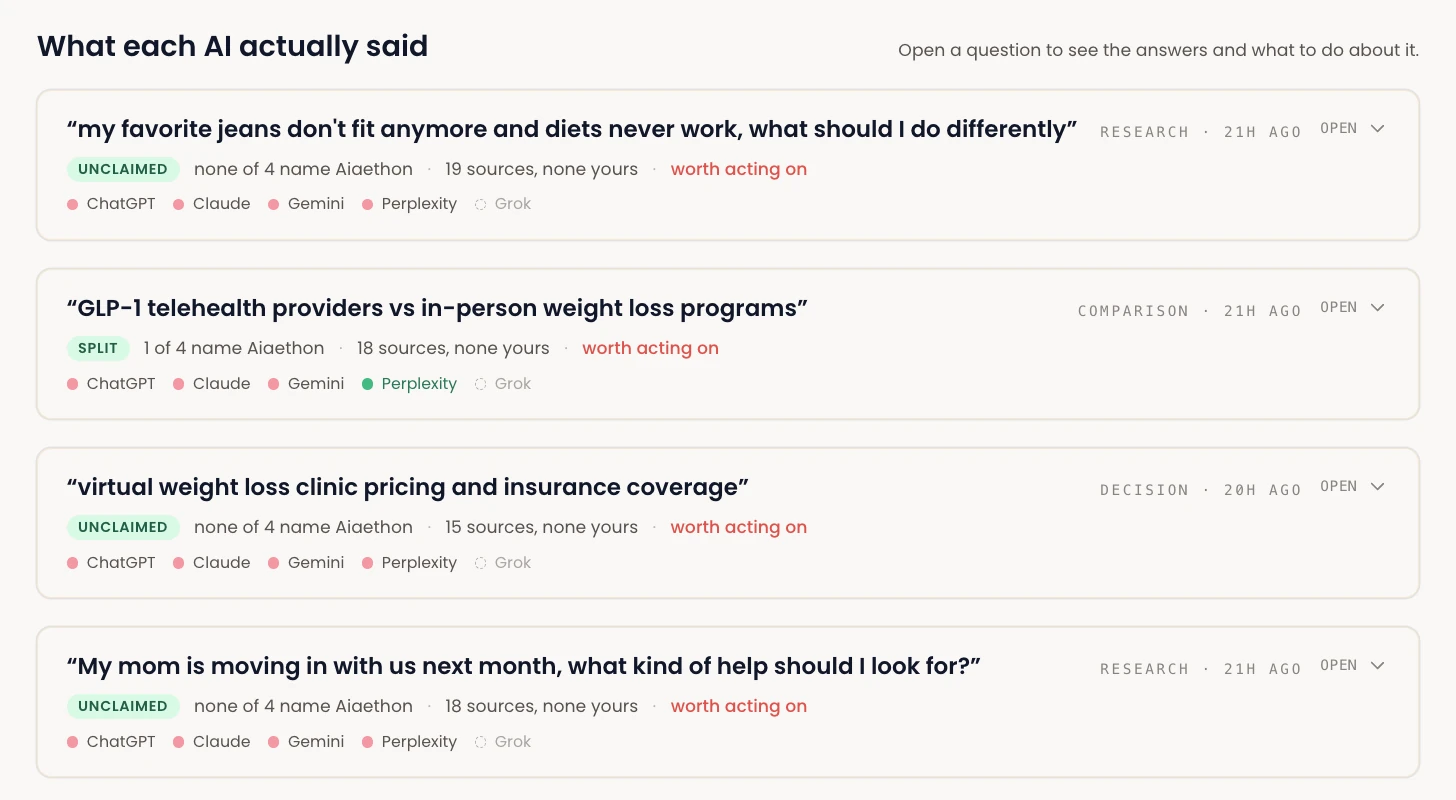
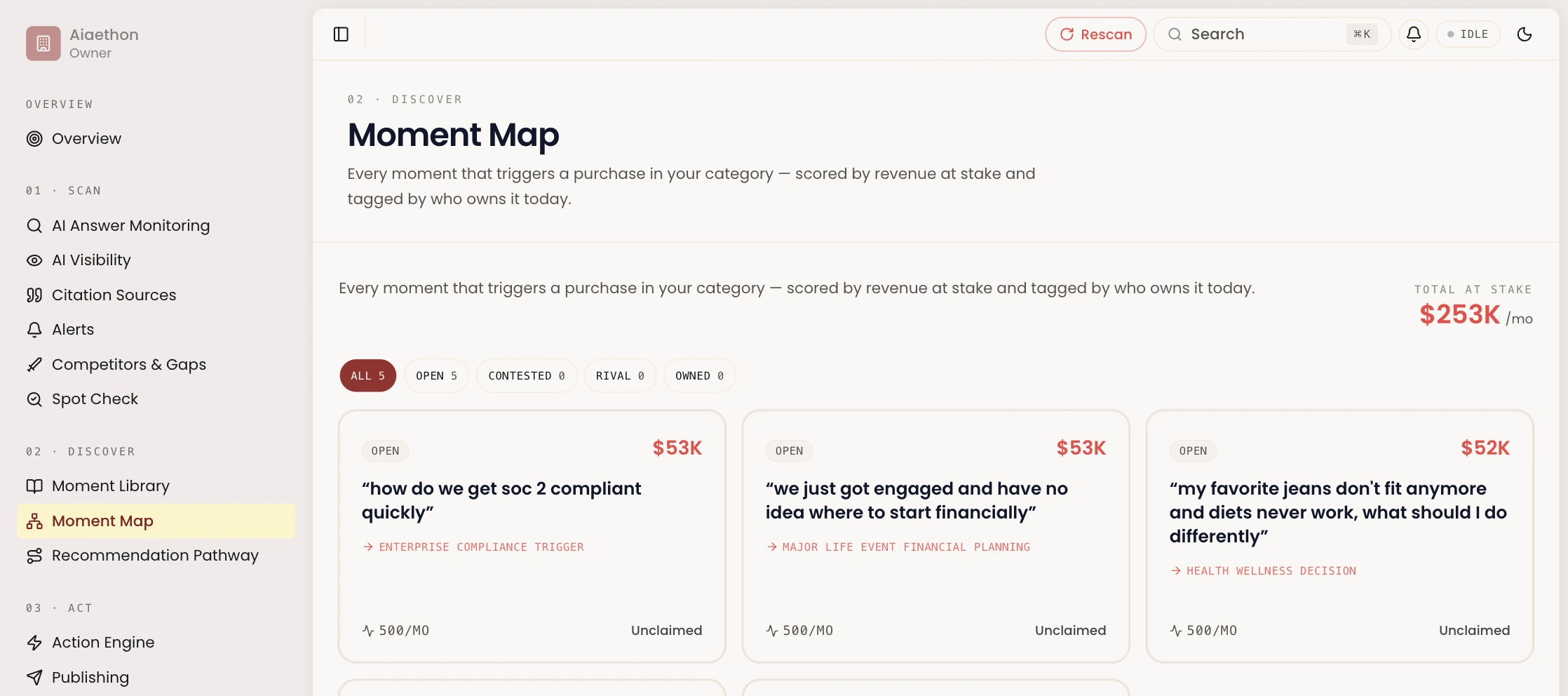
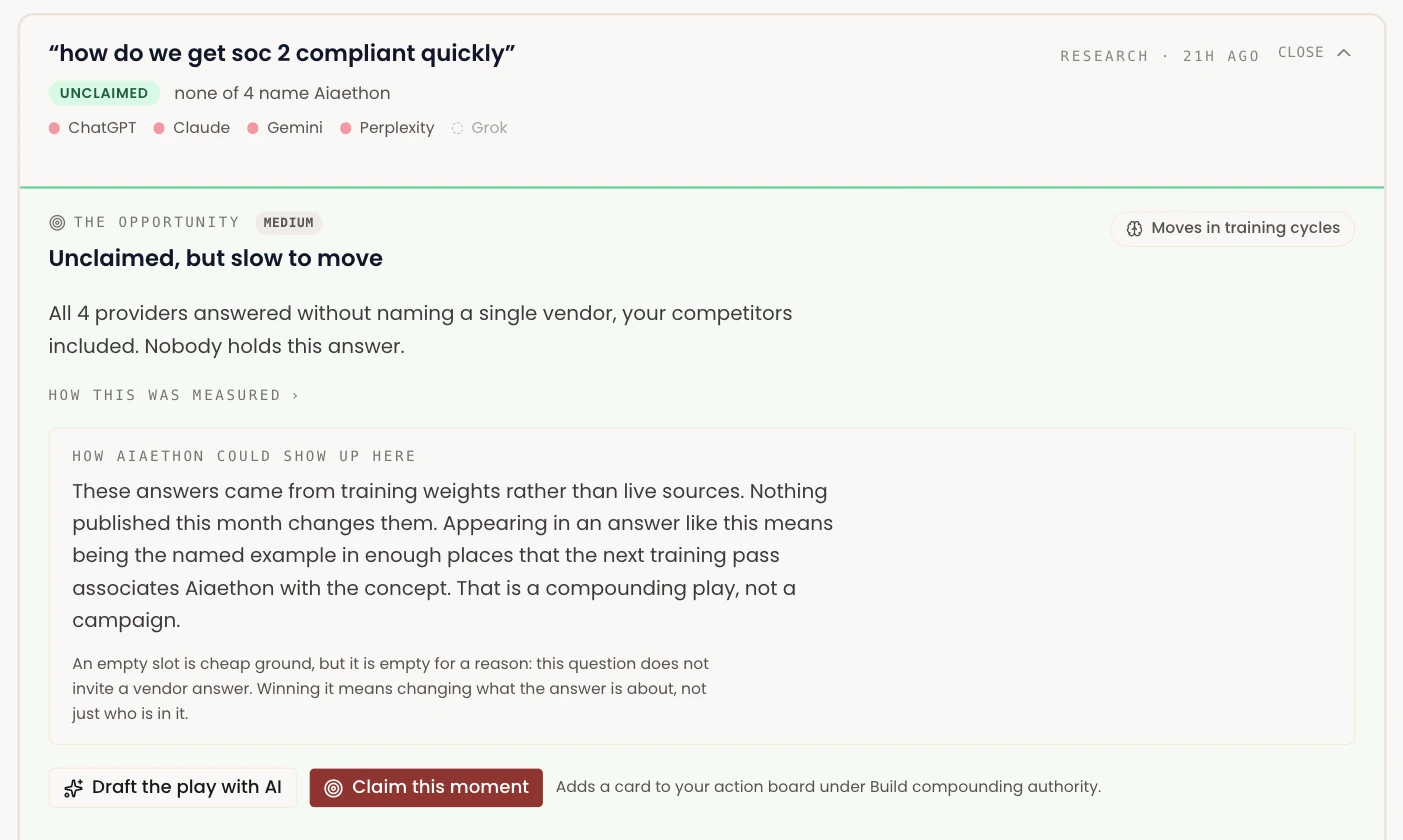
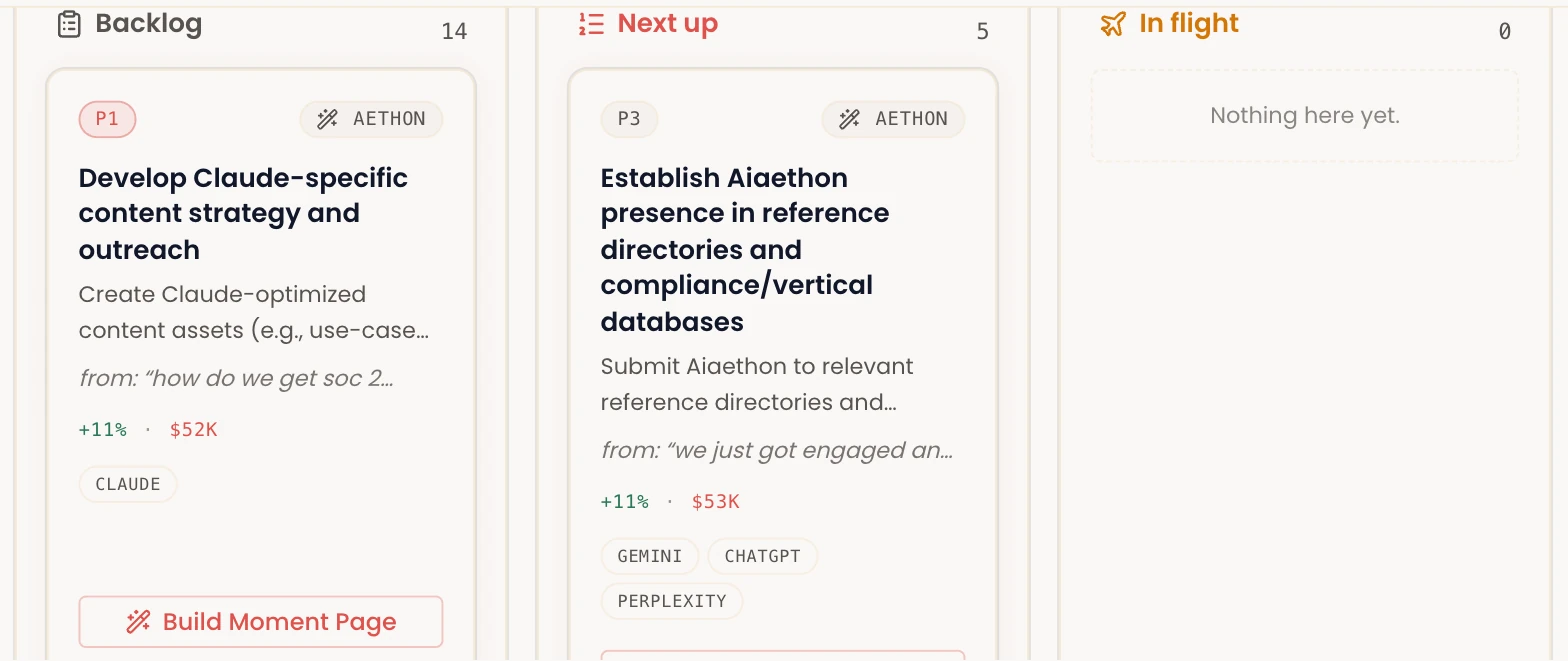
Keep your GEO and AEO stack for prompts and answers. Aethon adds the moment layer: map the situations, measure who each assistant names, diagnose why, and ship ranked fixes. That loop is Contextual AI Presence Mapping (CAPM).
Key takeaways
The assistant starts from a situation. Own the moment language, not only the query.
Retrieval and clear brand identity turn an inferred need into a nameable shortlist.
ChatGPT, Claude, Gemini and Perplexity share a pattern but differ in search and citation behavior.
FAQ
They interpret the user's situation, retrieve or recall sources, resolve brand entities, apply constraints in the prompt, then format an answer that may name one brand, a few options, or none.
They cover different jobs. Here you get the decision path inside an assistant. How AI recommends brands is the broader marketer guide on moments, shortlists and influence.
They share the pattern of interpreting a prompt and producing an answer, but their public docs describe different search and citation behaviors. Measure the same moment on each one.
Yes. Moment coverage, retrievable pages, entity clarity, constraint fit and citeable proof all shape who looks reasonable to name.
CAPM maps the moments that create demand, measures who assistants name, diagnoses gaps and ranks fixes. It sits beside GEO and AEO, not instead of them.
Read the Life Moments Report, run the free AI Visibility Checker for a baseline, then book a demo to see your category's moment map.
Book a 30-minute demo, or start with the free checker.