Fundamentals
What is CAPM?
Contextual AI Presence Mapping (CAPM) is Aethon's method: map the moments that create demand in your category, measure which brands AI recommends in each one, then ship the work that earns you the mention.
Why it exists
Buyers describe a situation before they search a keyword
Someone gets engaged, gets rear-ended, or watches traffic drop. They tell ChatGPT, Claude, Gemini or Perplexity what happened. Assistants infer a need and name brands. CAPM is the method for owning those moments instead of only chasing the keywords that show up later.
GEO and AEO still matter for prompts and answers. Keyword SEO still matters for crawlable pages. CAPM starts one step earlier: which moments create demand, who owns the recommendation today, and what to publish so the shortlist changes.
The CAPM loop
Four stages: map, measure, diagnose, act
Each stage has a clear output. Aethon runs this loop in the product.
Stage 1
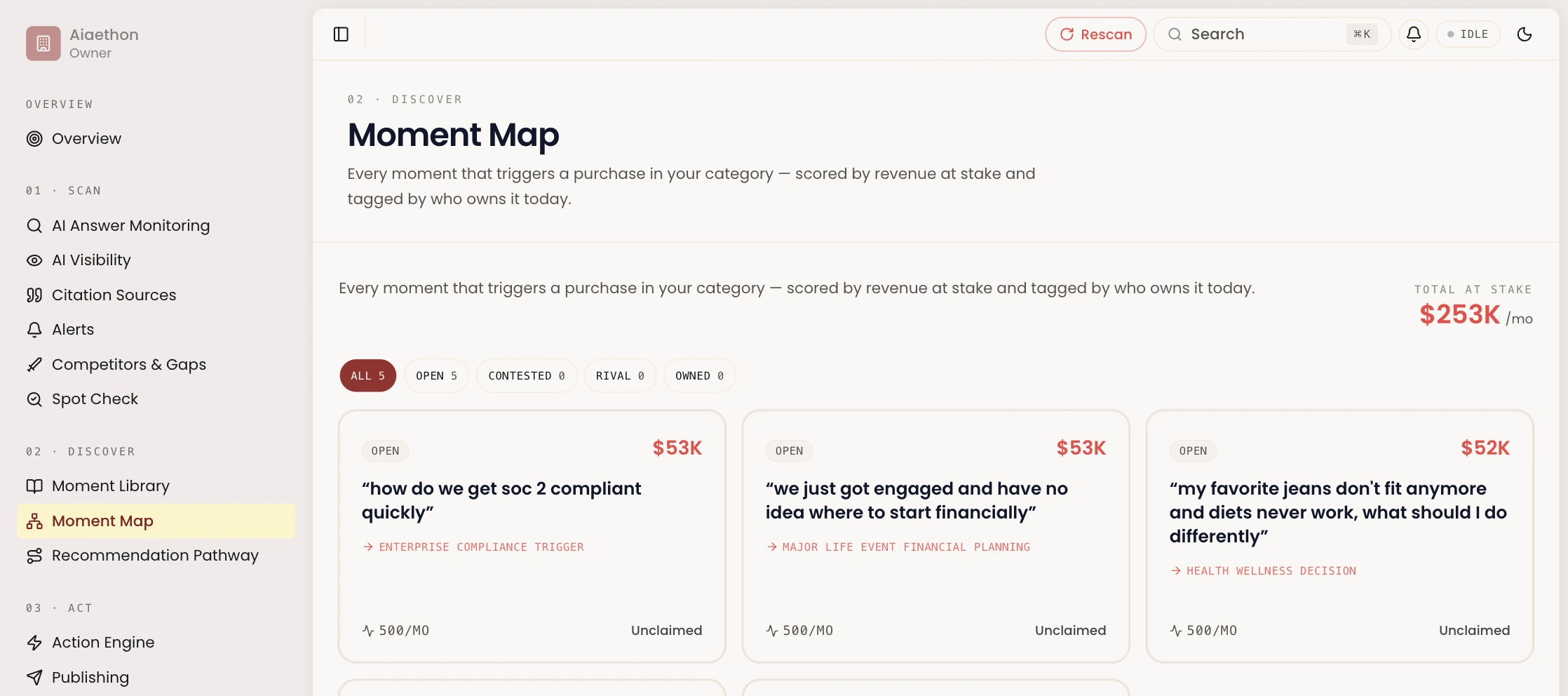
Map: Find demand-creating moments
List the life and business situations buyers in your category describe to assistants, written the way a person would say them out loud.
What happens
You collect moments from sales calls, support tickets, reviews and industry boards. Each moment is a situation, not a keyword.
What you get
A moment library for your category, with the needs those situations create and the brand types assistants often name.
Stage 2
Measure: See who AI names today
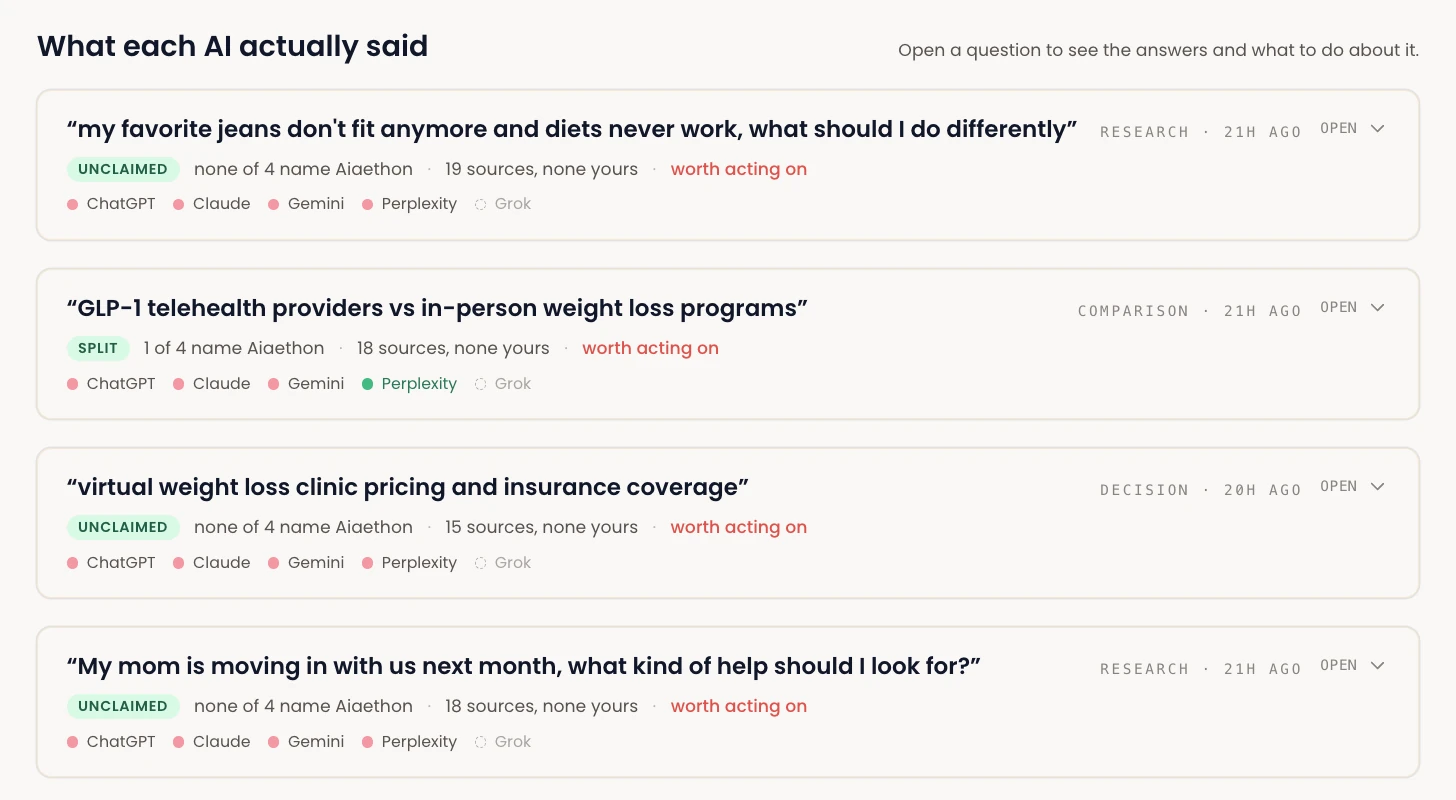
Run those moments across ChatGPT, Claude, Gemini and Perplexity on a schedule. Record who gets named, and who is missing.
What happens
Each tracked moment is asked the way a buyer would ask it. Answers are logged by assistant over time.
What you get
A clear view of presence and gaps by moment and by assistant, before you change anything.
Stage 3
Diagnose: Learn why a rival won
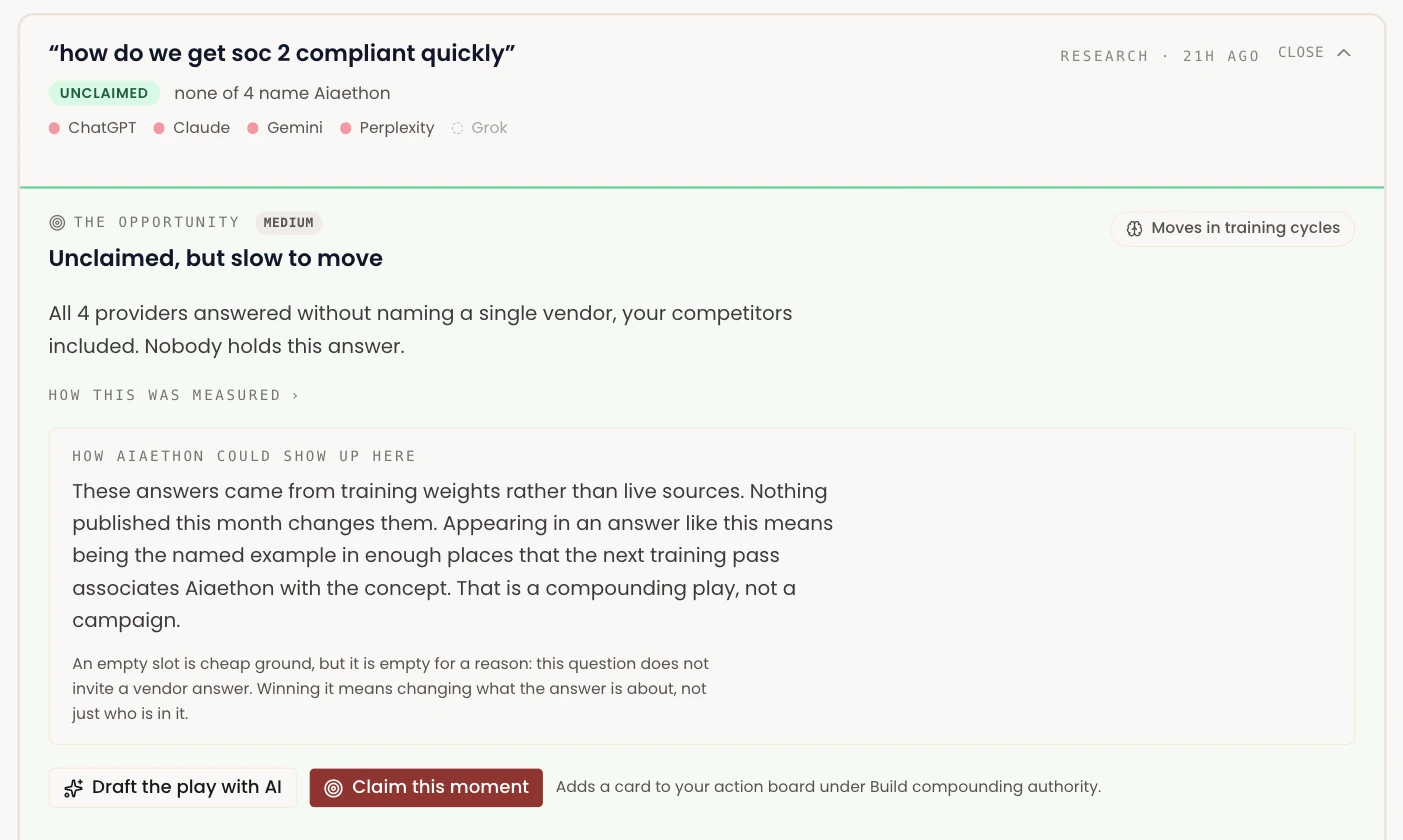
When another brand owns the mention, CAPM looks at the context assistants trust for that situation.
What happens
You review entity clarity, structured data, citations and coverage on the sources assistants lean on for that moment.
What you get
A plain-language reason the shortlist looks the way it does, tied to work you can actually ship.
Stage 4
Act: Ship ranked fixes
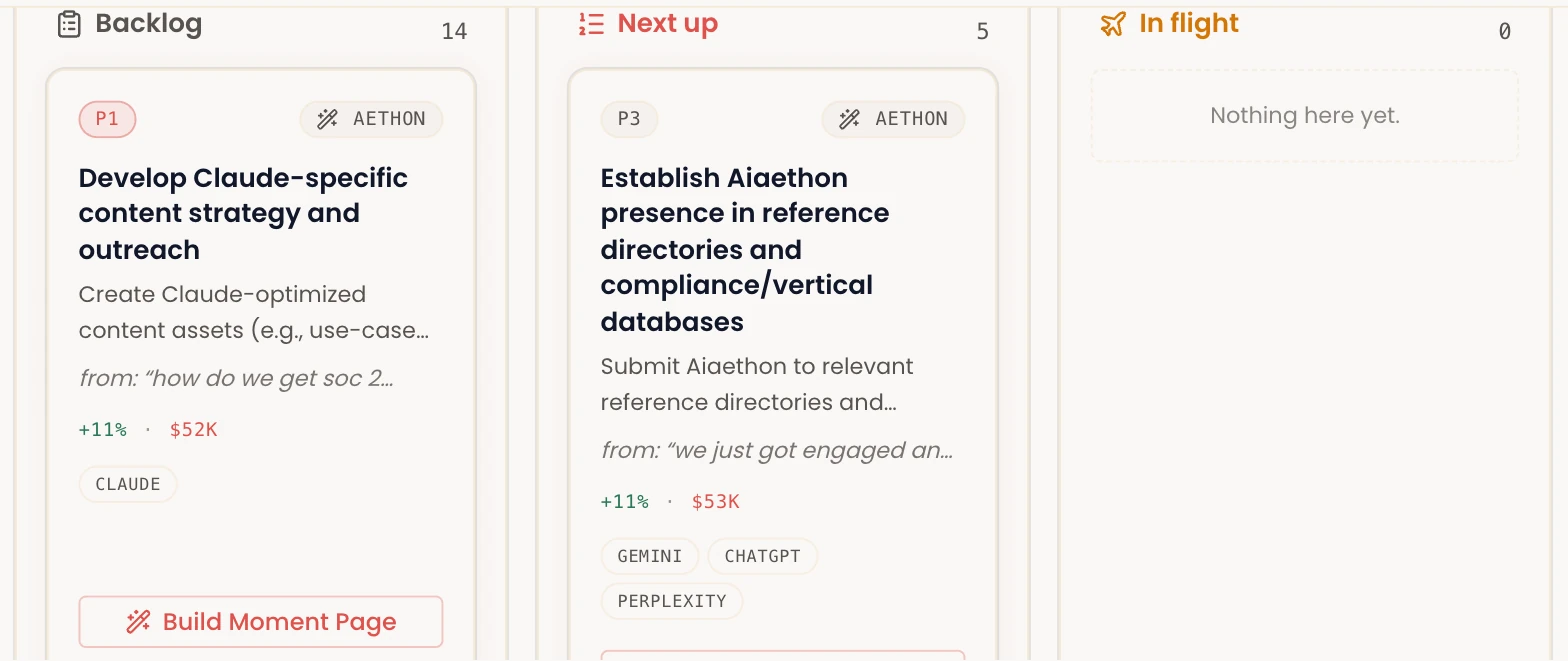
Turn gaps into briefs for content, schema, citations and coverage. Keep SEO, GEO and AEO for the layers they already cover.
What happens
Fixes are ranked by the moments that matter most in your category, then handed to marketing and content teams.
What you get
An action board of briefs you can publish, plus a baseline so you can see whether the recommendation changed.
Worked example
One life moment, walked through CAPM
A clearly fictional brand, so you can see the method without treating the outcomes as a customer case.
Northline Dental (fictional)
A multi-location dental group wants assistants to name it when someone describes urgent tooth pain while traveling.
"My crown just cracked on vacation and I am in a lot of pain. Who can see me today?"
Northline adds this to its healthcare moment library under urgent restorative care, with related moments for weekend fever-of-the-mouth and lost fillings.
Across ChatGPT, Claude, Gemini and Perplexity, assistants often name national urgent-care dental brands and local ER options. Northline is rarely in the shortlist for out-of-town travelers.
Trusted sources for this moment emphasize same-day hours, location clarity and plain-language pages about cracked crowns. Northline's site buries hours and has thin entity markup for each clinic.
Ship a cracked-crown guide, clinic-level schema, same-day hours on every location page, and citations on directories assistants already use. Keep SEO for "emergency dentist" keywords and GEO for related prompts.
How the layers fit
CAPM vs keyword SEO vs GEO and AEO
Complementary layers. You do not rip out what already works.
| Layer | Starts from | Primary question | Typical output |
|---|---|---|---|
| Keyword SEO | Queries people type | Can we rank for this keyword? | Pages, links and technical crawl health |
| GEO and AEO | Prompts and answers | Do we show up in AI answers for known prompts? | Prompt tracking, answer visibility and content shaped for assistants |
| CAPM | Life and business moments | Which situations create demand, and who gets named inside them? | Moment maps, presence by assistant, diagnosis and ranked fixes |
Read how Aethon works alongside GEO tools and what moment intelligence is.
In the product
Where CAPM shows up in Aethon
The same views from the homepage, shown whole so you can read the UI.
How revenue at stake is estimated
Observed: Aethon records assistant answers for a moment across runs and measures whether they name your brand. Modeled: estimated monthly conversation volume, your value per lead, and category conversion assumptions produce a directional revenue estimate. Dollar figures are modeled estimates, not booked revenue. You can replace the starting inputs with your own numbers. Aethon does not read your billing or CRM system.
Key takeaways
What to remember about CAPM
Moments before keywords
Demand often starts as a story told to an assistant. CAPM maps that story.
Measure, then ship
Presence without action is a scorecard. CAPM ends in ranked fixes.
Keep your stack
SEO, GEO and AEO stay. CAPM is the moment layer beside them.
FAQ
Frequently asked questions
What does CAPM stand for?
Contextual AI Presence Mapping. It is Aethon's method for the moment layer under GEO and AEO.
How is CAPM different from keyword SEO?
Keyword SEO targets what people type into a search box. CAPM starts earlier, with the situations people describe to AI assistants before a clean keyword exists.
How is CAPM different from GEO and AEO?
GEO and AEO improve how you show up for prompts and answers. CAPM maps the moments that create those prompts, measures who assistants recommend inside them, and ranks what to publish next.
Does CAPM replace my SEO or GEO tools?
No. Keep SEO, GEO and AEO for crawlable pages and prompt visibility. CAPM adds the moment layer and works alongside them.
What counts as a moment in CAPM?
A life or business change that creates need before a product-style search. People describe these to assistants in everyday language.
How do I start with CAPM?
Read the Life Moments Report, run the free AI Visibility Checker for a baseline, then book a demo to see your category's moment map.
See CAPM on your category
Book a 30-minute demo, or start with the free checker.